Tutankhamun's Burial Mask: A Craft Fair Review
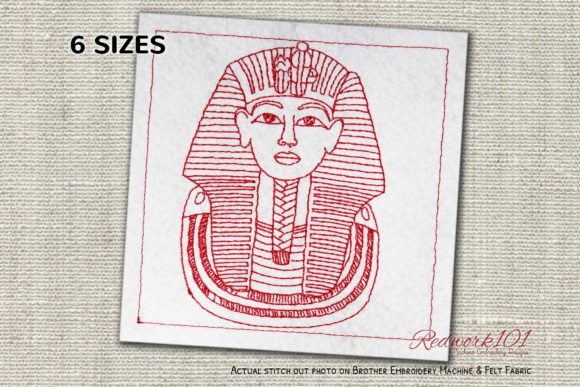
As an embroidery designer who has prepped for dozens of weekend craft fairs, I know that a machine embroidery design must earn its place in my production queue. When I first looked at Tutankhamun's Burial Mask, I felt that mix of excitement and caution that comes with a detailed, character-driven design. This is not a soft farmhouse floral or a cute animal face. It is a bold, regal depiction of an ancient Egyptian pharaoh's coffin mask, with a sense of history and mystery that immediately commands attention. For sellers who want to break away from generic motifs and offer something that sparks conversation, this embroidery file is a strong candidate. But it requires thoughtful planning to translate into a profitable craft fair product.
First Impressions and Booth Appeal
Tutankhamun's Burial Mask gives off a premium, decorative, and slightly theatrical vibe. The gold tones, intricate headdress lines, and iconic facial features feel like a museum piece translated into thread. At a craft fair, where customers are scanning tables quickly, this design stops the eye. It is not an everyday image, and that novelty is a selling point. I picture it on a black tote bag or a natural linen pillow cover, where the contrast makes the mask pop. The design feels both festive and timeless, fitting for history lovers, gift seekers, and anyone who appreciates bold visual storytelling. In a booth filled with typical farmhouse or botanical embroidery, Tutankhamun's Burial Mask becomes a hero product, drawing in customers who are tired of the ordinary.
Best Product Applications for This Embroidery File
Based on my experience testing similar designs, Tutankhamun's Burial Mask performs best on larger, flat surfaces where its detail can be appreciated. Here are the products I would prioritize for a craft fair table:
- Tote bag design: A sturdy canvas tote carries the mask well. The size gives you room to show the full headdress and face. Customers at markets love statement bags, and this design feels like a wearable piece of art.
- Apron embroidery: An apron with this mask on the front bib becomes a conversation piece. It works for cooking or crafting, and the historical theme adds a unique twist to a practical item.
- Tea towel embroidery: On a smooth, high-quality tea towel, the design looks elegant. But be careful with textured towels, as the dense stitch areas can lose clarity.
- Embroidered patch: If you scale the design down for a patch, test the stitch density first. The mask's details, especially the eyes and headdress stripes, must remain sharp. Patches sell well at fairs because they are low-cost, high-interest items.
- Pillow cover: A square pillow cover with the mask centered makes a strong decorative accent. It photographs beautifully for online listings and feels premium in hand.
- Market bag and small pouches: For smaller products like pouches, consider using only the face portion of the design to avoid crowding. The full mask may be too large for a cap or tiny pouch, so test the scale.
When I plan my booth, I also create a sample tote and a pillow cover as display pieces. These give customers a chance to see the fabric texture and thread quality up close. Tutankhamun's Burial Mask, with its golds and blues, looks rich in real life, which helps justify a higher price point.
Preparing for Batch Production and Commercial Embroidery
Before I commit to batch production, I always run a few tests. For this machine embroidery design, I start by checking the digital embroidery file details. I need to know the hoop size, thread colors, and stitch density. The description says this is an embroidery of an Egyptian pharaoh's coffin, and it comes with multiple embroidery formats, but I still verify the exact stitch count and color changes. If the design has dense stitch areas, I plan to use a cutaway stabilizer to prevent puckering, especially on items like tote bags or aprons that see heavy use.
I recommend creating at least one real mockup before selling. Stitch out the design on the exact fabric you plan to use for your craft fair products. This allows you to check thread contrast, inspect clarity, and confirm that the mask's details translate well. For example, if the design has small lettering or intricate headdress lines, those might blur on dark fabric. I would test it on a light golden or cream background to make the colors sing. Also, confirm commercial licensing for the embroidery file. As an Etsy seller or small shop owner, you need to know if you are allowed to sell finished products made from this design.
For batch production, I find that Tutankhamun's Burial Mask is repeatable once you have the settings dialed in. The key is to use the same stabilizer, hoop size, and thread tension across all units. This consistency ensures your booth looks professional and your handmade products maintain a uniform quality. I also keep a sample of the first successful stitch-out as a reference for future runs.
Stitch Density, Fabric Texture, and Design Clarity
This is where careful-use notes become critical. Tutankhamun's Burial Mask likely has areas of dense stitching, especially around the headdress and facial features. Here are my observations from working with similar historic designs:
- Dense stitch areas: They can cause the fabric to pull or pucker if the stabilizer is not strong enough. Use a cutaway stabilizer, not a tearaway, for items like tote bags and pillow covers. For tea towels, a medium-weight cutaway works, but test first.
- Tiny details: The mask's eyes, stripes, and brow lines are small. If you scale the design down for patches or caps, these details may become unclear. I advise keeping the design at a size where the smallest element is at least 3mm wide.
- Small lettering: If the design includes any hieroglyphic or text elements, test them carefully. Tiny lettering on textured towels or curved caps often loses legibility.
- Thick fabric: On heavy canvas or denim, the design may need a larger hoop and a stronger needle. Check that your machine can handle the density without slowing down.
- Curved cap surfaces: Caps are tricky for any detailed design. The mask's flat shape may not adapt well to a curved crown. If you want to embroider caps, consider using a cap frame and reducing the design size significantly.
- Dark fabric: On black or very dark backgrounds, the gold and blue threads might not contrast enough. I recommend stitching a test on a scrap of the dark fabric to see if the design pops. If not, choose a lighter fabric or adjust the thread colors.
In my opinion, this design shines best on medium-weight, smooth fabrics like cotton twill, linen, or high-quality canvas. Avoid thick towels or loosely woven fabrics that can swallow the stitches. The clarity of the mask is what sells it, so protect that clarity with careful fabric and stabilizer choices.
Photographing and Listing Your Finished Products
For online sales, especially on Etsy, the visual presentation of Tutankhamun's Burial Mask can make or break the listing. The design photographs well because of its strong geometry and recognizable shape. I would take photos of the finished product on a neutral background, with natural light that highlights the thread sheen. A close-up shot of the mask's details helps customers see the craftsmanship. For printable mockups, you can overlay the design onto different product templates, but nothing beats a real photo for trust. I also include a photo of the product in use, like a tote bag on a shoulder or a pillow on a sofa, to show scale and context.
In your listing, mention the design's origin from the Africa category, as it adds a educational element that buyers appreciate. Use keywords like machine embroidery design, handmade product, and ancient Egyptian craft. The product type is embroidery, so your listing should clearly state that the item is a finished product, not a digital embroidery file. This is important for Etsy sellers to avoid confusion.
Why This Design Deserves a Spot in Your Booth
Tutankhamun's Burial Mask has genuine selling power for craft fair sellers and handmade shop owners. It is not a design that fades into the background. It creates engagement, draws customers who are interested in history, art, or unique decor, and it adds a premium feel to your product line. The key is to test it thoroughly, choose the right products, and produce it with care. Once you have a real mockup that looks sharp and professional, you can confidently batch produce for markets, Etsy listings, and wholesale orders. This embroidery file is a solid asset for anyone looking to diversify their design assets with something bold, memorable, and distinctly African in theme. Use it wisely, and it will become a conversation starter at your next craft fair.