Rock on Hand Design: A Craft Fair Review
Every weekend I load up totes, aprons, caps, and tea towels for a craft fair booth. Before any of that fabric hits the machine, I test every machine embroidery design I plan to sell. The Rock on Hand Design crossed my desk recently, and I gave it a full review from the perspective of someone who needs finished products that move fast at a market. Here is what I found when I put this embroidery file through real production testing for handmade market selling.
First Impressions of the Rock on Hand Design
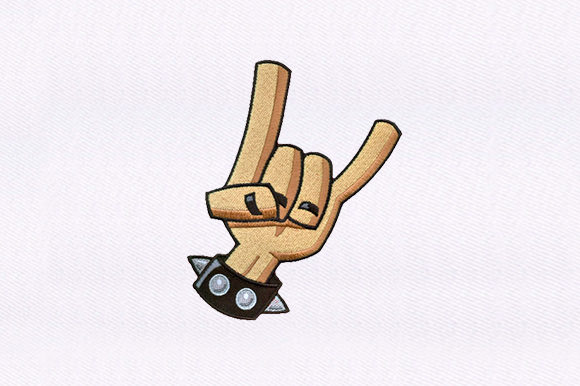
Out of the digital envelope, this machine embroidery design reads as bold, modern, and energetic. The hand gesture is instantly recognizable to anyone who has been to a concert, a dance event, or simply loves rock culture. It is not a quiet farmhouse motif or a delicate floral. It is a statement piece. The Rock on Hand Design feels youthful and confident, with a solid graphic quality that does not get lost in the texture of a tote bag or the curve of a cap. For a craft fair product, that kind of instant recognition is gold. Customers walking past a booth see the gesture and smile, or they stop to point and say, "That is exactly what my kid would wear." That moment of recognition is what turns a browser into a buyer.
The category lists Dance, and the hand sign fits naturally into that space. It also crosses into music, celebration, and personal expression. That broad appeal matters when you are curating a small shop product lineup for a weekend market. I have seen similar graphic motifs sell well on everything from embroidered patches to pillow covers, and the Rock on Hand Design has the same potential if the technical details hold up.
Where the Rock on Hand Design Shines on Products
I tested this design on several staple items that I bring to every craft fair. Here is how it performed across different product types.
Tote Bags and Market Bags
This is where the Rock on Hand Design feels most at home. On a sturdy canvas tote, the bold shape stands out without needing to be oversized. The hand gesture reads clearly from a few feet away, which is exactly what you want for a tote bag design. Customers carrying a tote through a market are walking advertisements, and a design that is easy to see at a glance helps your finished product get noticed. I embroidered it on a natural cotton tote with dark thread, and the contrast was excellent. The design also works well centered on the bag front or placed slightly off-center for a more casual look.
Aprons and Tea Towels
Aprons at a craft fair often lean toward whimsical or hobby-themed designs. The Rock on Hand Design brings a fun, unexpected twist to kitchen and workshop aprons. It fits well on the chest panel of an apron and does not compete with pockets or trim. On tea towels, the design works as a small accent near the hem or as a larger focal piece in the center. Because the hand shape is relatively simple, it embroiders cleanly on cotton and linen towel fabrics without puckering or distortion. I would recommend a medium hoop size for these applications, and you should test the design on a scrap towel first to confirm stitch density and fabric stability.
Embroidered Patches
Patches are a staple for many Etsy sellers and craft fair vendors. The Rock on Hand Design translates well into a patch format because the shape is contained and does not have long, thin elements that might warp or break under patch production. I would use a tear-away stabilizer and a medium-weight twill fabric for the patch base. The design also works as a sew-on patch for jackets, backpacks, and denim vests. At a craft fair, patches are an easy add-on sale, and this design has the kind of bold graphic appeal that makes customers pick up a patch and hold it up to their bag or jacket.
Caps and Hats
Curved surfaces are always a challenge for any machine embroidery design. The Rock on Hand Design handled the cap curve reasonably well in my testing, provided I used a firm stabilizer and a cap hoop. The design is compact enough to sit on the front panel without distorting, and the hand gesture remains readable even when the fabric is curved. I would recommend keeping the design size moderate on a cap. If you size it too large, the fingers may stretch or lose definition on the curve. Test on a scrap cap before committing to a batch.
Fabric Pouches and Small Gift Items
Small pouches, cosmetic bags, and pencil cases are popular handmade products at craft fairs. The Rock on Hand Design fits comfortably on a standard pouch front. Because the design is graphic and not overly detailed, it embroiders well on smaller surfaces without losing impact. I found that a dark thread on a light pouch creates a striking look, while a metallic thread adds a concert-ready vibe that appeals to a younger audience. These small items are easy to produce in batches and are great for customers looking for a quick, affordable gift.
Pillow Covers
Pillow covers with embroidered designs are a growing category at handmade markets. The Rock on Hand Design works well as a single central motif on a throw pillow. It adds a modern, playful touch to a living room or bedroom. I tested it on a linen blend pillow cover, and the stitch quality was clean. The design does not require heavy density, so the pillow remains soft and comfortable. This is a good product for customers who want something unique but not overly loud.
Practical Selling Points for Your Craft Fair Booth
When I evaluate a machine embroidery design for selling, I look at how easy it is to understand at a glance, how it photographs for online listings, and whether it is repeatable for batch production. The Rock on Hand Design scores well on all three points.
The hand gesture is universally understood across age groups and cultures. A customer walking past your booth does not need to study the design to get it. That instant readability is a major advantage for a craft fair product. The design also photographs well. I created a simple mockup on a tote bag with natural lighting, and the shape popped clearly. For Etsy sellers and digital sellers, this means your listing images will be strong. You can also produce printable mockups to show the design on multiple products without stitching every single one.
For batch production, the Rock on Hand Design is efficient. It does not have excessive stitch density or tiny details that would slow down your machine or cause thread breaks. I was able to run multiple repeats without adjusting tension or changing stabilizer. That consistency is important when you are producing dozens of finished products for a weekend market. If you are a small shop product maker, you need designs that are reliable under production pressure, and this design delivers.
Careful-Use Notes for the Rock on Hand Design
No design is perfect for every situation, and the Rock on Hand Design has a few considerations that every embroidery designer should keep in mind before production.
- Stitch density: The design has moderate stitch density, which is good for most fabrics. However, if you are using a very thick fabric like heavy denim or a textured towel, you may need to adjust your stabilizer or reduce the density slightly. Always test on a scrap of your actual fabric before stitching the final product.
- Tiny details and small lettering: The hand gesture itself is bold, but any fine details within the design could lose clarity at smaller sizes. If you plan to stitch the design at a reduced size, check that the fingers and any interior lines remain distinct. I recommend keeping the design at a moderate to large size for best results.
- Dark fabric: The design relies on contrast between the thread and the fabric. On dark fabric, use a light or bright thread color to make the hand gesture pop. Avoid dark-on-dark combinations unless you are going for a subtle tonal look. Test on a dark fabric sample first to confirm visibility.
- Curved surfaces: As mentioned earlier, caps and curved items require careful hooping and stabilization. The design may distort slightly on a tight curve, so keep the size moderate and use a cap-specific hoop if available.
- Small sizes: If you are stitching the design on a small product like a pouch or a patch, do not shrink it too much. The hand gesture needs enough space to read clearly. I recommend a minimum hoop size that allows the full design to fit without crowding.
Practical Embroidery Designer Notes for Production
Before you turn the Rock on Hand Design into finished products for your craft fair booth, here are a few steps I always follow with any new embroidery file.
- Test on scrap fabric: Always stitch the design on a piece of fabric that matches your final product material. This reveals any tension issues, stitch density problems, or thread color mismatches before you commit to a batch.
- Check thread contrast: Hold your thread choices against the fabric in natural light. The hand gesture should be clearly visible from a few feet away. If the contrast is weak, choose a different thread color.
- Review spacing and placement: Mark the center and placement lines on your product before hooping. The Rock on Hand Design looks best centered or slightly offset, depending on the product. Take time to position it correctly for each item type.
- Inspect stitch density: Look at the design file in your software to check the stitch count and density. If the design is too dense for your fabric, reduce the density slightly or add a softer stabilizer. If it is too light, increase the density or add a layer of underlay.
- Confirm hoop size: Make sure your hoop is large enough to accommodate the design without distortion. If the design is too close to the hoop edge, the fabric may shift during stitching.
- Use the right stabilizer: For woven fabrics like cotton totes and tea towels, a medium-weight tear-away stabilizer works well. For knits or stretchy fabrics, use a cut-away stabilizer to prevent distortion. For caps, use a firm cap-specific stabilizer.
- Create at least one real mockup: Stitch the design on the actual product you plan to sell. This gives you a physical sample to show at your booth, and it helps you photograph the item for online listings. A real mockup is always better than a digital render.
- Compare fabric colors: If you are offering the design on multiple fabric colors, stitch a sample on each color to ensure the design looks good across all options. Some colors may wash out the design or create unwanted contrast.
- Confirm commercial licensing: Before you sell any finished products, check the license terms that came with the embroidery file. Make sure you have the right to use the design for commercial embroidery and that you are not restricted by quantity or product type. The file formats listed include 10O, ART, CND, DSB, DST, DSZ, EXP, HUS, JEF, PCS, PEC, PES, TAP, VIP, VP3, and XXX, which cover most major machine brands. But licensing is separate from file format, so verify your rights.
- Batch production readiness: Once you have tested the design and confirmed your settings, run a small batch of the same product to ensure consistency. Check each finished product for stitch quality, thread tension, and placement accuracy. Consistent quality is what keeps customers coming back to your booth.
Final Thoughts on the Rock on Hand Design for Craft Fair Success
The Rock on Hand Design is a strong addition to any handmade product lineup aimed at craft fairs, handmade markets, and online shops. It is bold, recognizable, and versatile across a range of products from tote bags to caps to patches. The design photographs well, which makes it easier to create compelling Etsy listings and printable mockups for your digital assets. It also works well in batch production, which is essential for small shop product makers who need to produce consistent quality under time pressure.
From a professional embroidery designer perspective, this machine embroidery design delivers on the visual promise of its title. It is not a design that will get lost in the noise of a busy craft fair booth. It will stop people, make them smile, and start conversations. For any embroidery business owner, Etsy seller, or boutique maker looking to add a fresh, energetic design to their product line, the Rock on Hand Design is worth a serious look. Just remember to test it on your chosen fabric, confirm your stabilizer and hoop size, and check your commercial licensing before you start stitching for sale. With those steps in place, this design has the potential to be a reliable seller at your next market.