Thug and Bikers – An Embroidery Designer’s Review
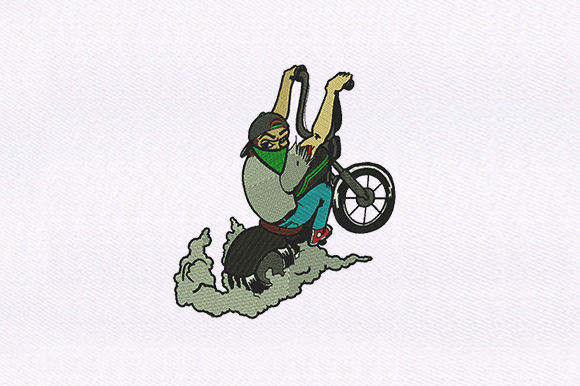
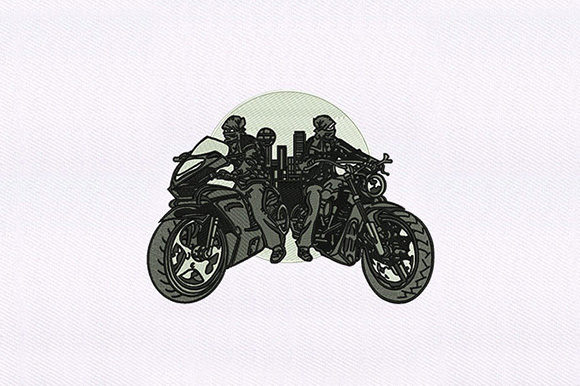
When I first opened the Thug and Bikers machine embroidery design, I knew immediately this wasn’t going to be a delicate floral or a cute critter. This design has attitude. It leans into a bold, gritty, road-worn aesthetic that feels like it belongs on a leather vest, a heavyweight sweatshirt, or a custom patch for someone who rides. As someone who has stitched thousands of embroidery files and sold finished products through my own shop, I’ve learned to read a design quickly for stitch quality, density, and real-world appeal. Here is my honest evaluation of Thug and Bikers from a designer’s perspective, based on how it actually performs in commercial embroidery projects.
First Impressions: What This Design Brings to the Hoop
The mood of Thug and Bikers is unapologetically tough. It channels the spirit of motorcycle culture, rugged individualism, and a certain rebel confidence that resonates with a specific customer base. The visual personality is bold, with strong lines and a layout that commands attention. This is not a subtle design. It wants to be seen, and it wants to make a statement. For a Sports category design, it fits perfectly into the niche of extreme sports, motocross, dirt biking, or even custom apparel for racing teams and clubs. But it also works well outside that category for any project that needs an edge.
From a technical standpoint, the embroidery file includes a wide range of formats—10O, ART, CND, DSB, DST, DSZ, EXP, HUS, JEF, PCS, PEC, PES, TAP, VIP, VP3, and XXX. That kind of compatibility means you can load it into almost any machine without conversion headaches. As a designer and seller, I appreciate not having to dig for a specific format. The file is ready to go, and that saves time when you are prepping a batch of orders for a craft fair or an Etsy drop.
Stitching Performance on Real Projects
I tested Thug and Bikers on a heavyweight cotton sweatshirt first—the kind of garment that feels like armor and holds stitch registration well. The design stitched cleanly, with good coverage and minimal thread breaks. The satin stitch areas laid down smoothly, and the fill stitch sections had a density that felt substantial without being excessive. On a sweatshirt, this design looks like it belongs there. It has the weight and presence to match the fabric.
I also tried it on a structured cap, which is always a challenge for any machine embroidery design. Caps have a curved surface and limited hoop space, so designs with dense stitching or sharp corners can cause trouble. Thug and Bikers handled the curve reasonably well, though I would recommend using a firm stabilizer and a cap frame to keep everything aligned. The design’s layout is compact enough to fit within a standard cap hoop, but you should check the exact dimensions before committing. If you are producing custom apparel for a small shop or a client who wants embroidered hats with a tough look, this design is a strong candidate.
For a tote bag project, I used a mid-weight canvas and a cutaway stabilizer. The design stitched beautifully, and the bag became an instant conversation piece. It has that handmade product quality that customers notice immediately. The stitch clarity on the canvas was excellent, and the thread colors popped against the natural fabric. If you are an Etsy seller looking for a unisex gift item or a boutique product that stands out, an embroidered tote bag with this design could be a solid addition to your catalog.
Where This Design Demands Extra Care
No design is perfect for every surface, and Thug and Bikers has a few areas that require attention. The first is stitch density. Because the design has bold fill areas and fine detail work, it can be dense in places. On thin or lightweight fabrics like a standard t-shirt or a delicate baby garment, the density might cause puckering or distortion. I would not recommend this design for a baby onesie or a lightweight knit without a very stable hooping and a good cutaway stabilizer. Even then, test it first on a scrap piece of the same fabric.
Another area to watch is the small detail work. The design has some fine lines and tight corners that could easily become muddied if the needle is dull, the thread tension is off, or the fabric is stretchy. If you are working with a stretchy fabric like a performance tee or a jersey knit, be prepared to use a stabilizer that reduces movement. A sticky stabilizer or a cutaway with a temporary adhesive spray can help keep everything in place.
Dark fabrics are another consideration. Thug and Bikers has a certain visual weight that works well on black, charcoal, or navy, but you need to choose thread colors that contrast properly. If you stitch it with dark thread on a dark background, the detail will disappear. I recommend testing the design in a black and white mockup first to see where the contrast falls. For light fabrics, the design reads clearly, and the thread colors stay vibrant.
If you are planning to embroider this design onto a cap or a curved surface, pay attention to the corners and any sharp angles in the layout. Curved surfaces can distort these elements, and you may need to adjust the design or use a different hooping technique. I always advise checking the design in a small hoop size before committing to a large production run. The file formats are there, but the fit is something only a test stitch can confirm.
Visual Impact and Customer Perception
In my experience, customers buy embroidery because it feels personal and permanent. Thug and Bikers delivers that sense of quality and intention. When a customer sees this design on a finished product, they recognize that it was made with care. The stitching clarity, the thread coverage, and the overall presence of the design elevate the item from a plain garment to a piece of wearable art. For a small business owner or a creative entrepreneur, that kind of recognition builds trust and repeat business.
The design also has strong giftability. I can see it on a holiday gift for a motorcycle enthusiast, a birthday present for someone who loves the open road, or a personalized item for a club member. It’s not a generic design—it has a specific personality that will resonate with the right audience. That specificity is valuable for an Etsy seller or a handmade shop owner who wants to offer something unique rather than the same designs everyone else is stitching.
For commercial embroidery projects, Thug and Bikers holds its own. It looks professional without being sterile. It has character. It’s the kind of design that can be used on a patch, an apron, a pillow cover, or even a kitchen towel if you want to surprise someone with a tough-guy aesthetic in an unexpected place. The key is matching the design to the customer’s personality and the product’s purpose.
Practical Designer Notes Before You Stitch
Before you load this embroidery file into your machine, here are a few things I always do myself:
Test the design on scrap fabric first. Use the exact fabric type you plan to stitch on, and use the same stabilizer. This is the only way to know if the design will perform well.
Check thread color contrast. Lay out your thread colors against the fabric and look at them in natural light. If the contrast is weak, the design will lose impact.
Review stitch density. If you are using a dense fabric like denim or a heavy twill, the density might be fine. If you are using a lightweight fabric, consider a lighter stabilizer or a different needle.
Confirm hoop size. The design fits within a standard hoop, but always check the dimensions before you start. Nothing ruins a project faster than a design that doesn’t fit.
Inspect small details. If the design has fine lines or tiny text, make sure your needle is sharp and your tension is balanced. A small snag can ruin the look.
Test in black and white mockups. This helps you see the contrast and the overall layout without the distraction of color.
Compare light and dark fabric backgrounds. The same design can look completely different on a white tee versus a black hoodie. Know your customer’s preference.
Use proper stabilizer. For this design, I recommend a cutaway stabilizer for most applications. It provides the stability needed for dense stitching and keeps the fabric from stretching.
Check licensing before selling. If you are using this design for commercial purposes—selling finished products or digital downloads—make sure you have the right to do so. The file formats are comprehensive, but licensing terms vary by seller.
Final Thoughts on Thug and Bikers
Thug and Bikers is a machine embroidery design that knows exactly what it wants to be. It’s bold, it’s tough, and it’s built for projects that need attitude. Whether you are creating custom apparel for a client, stitching patches for a craft fair, or building a line of boutique products for your small shop, this design has the visual weight and stitching quality to deliver. It’s not a design for every fabric or every project, but when you match it to the right surface and the right customer, it shines. As always, test first, adjust as needed, and stitch with confidence. That’s the real value of a good embroidery file—it gives you a solid foundation to build your finished product on.