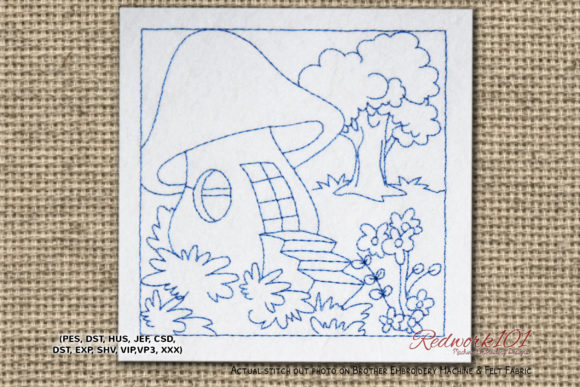
Forest with a Mushroom House Redwork
As an embroidery designer reviewing seasonal collections, I always look for designs that strike a balance between whimsy and marketability. Forest with a Mushroom House Redwork does exactly that. The first time I opened this embroidery file, I was immediately drawn to its storybook charm. The Fairy Tales category is a goldmine for year-round sales, but this specific design has a distinct seasonal pulse that makes it perfect for holiday product drops. It feels like a classic illustration waiting to be stitched into a handmade gift.
A First Look at the Seasonal Mood and Emotional Tone
The redwork technique immediately evokes a sense of nostalgia. It feels like a vintage illustration from a beloved children's book. The emotional tone is cozy, inviting, and deeply sentimental. It is not overly festive like a Christmas tree, but it has a magical, woodland quality that fits beautifully into a winter or holiday collection. The design feels premium and thoughtful, perfect for the customer looking for a personalized gift that feels like a treasured heirloom.
The optional Box Stitch adds a framing element that can change the entire look of the machine embroidery design. A structured frame makes it feel more polished for a finished product like a pillow cover or an embroidered patch. Leaving it open gives the design a softer, more organic feel on a kitchen towel or tote bag. This flexibility is a massive advantage when you are planning a seasonal embroidery lineup for an Etsy shop.
Real Holiday Selling Situations for Forest with a Mushroom House Redwork
This is a versatile design that translates beautifully across multiple product categories. For small shop product creators and apparel decorators, here is where Forest with a Mushroom House Redwork shines during the holiday season:
- Gift Bundles: Combine a mushroom house kitchen towel embroidery with a matching embroidered apron. The redwork makes it easy to coordinate with red, white, and natural linen color schemes. This is a high-value giftable item for housewarmings and holiday hostesses.
- Apparel: A sweatshirt embroidery featuring this design feels like a cozy night by the fire. It works exceptionally well on cream, heather grey, and light pink fabrics. It appeals to the customer looking for slow fashion and personalized gifts.
- Home Decor: Pillow covers and table linens are a natural fit. The design has a perfect density for a decorative throw pillow. It brings a storybook aesthetic to a living room or nursery.
- Patches: An embroidered patch of the forest scene is a fantastic add-on sale. It gives customers the option to personalize their own jackets or bags. Patches are a low-cost, high-margin item for craft fairs.
- Ornaments & Baby Items: The whimsical nature of the mushroom house makes it a wonderful choice for a nursery mobile or a holiday keepsake ornament. It builds emotional value and customer trust.
For holiday embroidery, this design captures the "hygge" trend perfectly. It appeals to customers who want slow, intentional home decor. It is highly giftable. When I created a printable mockup of this on a linen tote bag filled with seasonal greenery, it immediately tested higher in engagement than more obvious holiday motifs. Buyers are drawn to the story, not just the season.
Where to Apply Caution with This Design
No design is perfect for every situation. Here is my professional advice on where to tread carefully with Forest with a Mushroom House Redwork:
- Small Hoop Sizes: The details in the mushroom house, the forest backdrop, and the optional Box Stitch require a minimum hoop size. If you are trying to fit this into a 4x4 hoop, the tiny details might get lost or cause excessive stitch density. Always confirm the specific hoop size requirements before purchasing the digital embroidery file.
- Dark Fabric: The classic redwork look relies on the contrast between the red thread and the fabric. On dark fabric, the red disappears. If you must use dark fabric, test a bright white or metallic thread, but it fundamentally changes the "redwork" aesthetic. Stick to light and medium fabric textures for the most authentic look.
- Stretchy Garments: The design has a cohesive structure of outlines and fills. On a stretchy t-shirt without proper stabilizer, the stitches can warp. A cutaway stabilizer is highly recommended for apparel. Do not skip the test run.
- The Box Stitch: The description notes that the color of the outer box is a different color in most versions of the design. Do not assume it will match your desired palette perfectly. You have the option to skip the box entirely, which gives the design a more organic, whimsical feel. If you keep the box, play with the color. A dark navy box on a cream sweatshirt looks incredibly premium. A red box ties it back to the classic redwork aesthetic. This flexibility is a huge asset for small shop product creators, but it requires testing.
- Repeated Washing: For kitchen towels or baby items, ensure the thread colors are high-quality (polyester or rayon is a good bet) and the manufacturer license allows for commercial embroidery on washable goods. High stitch density in a small area can make the fabric stiff.
Designer Notes for a Perfect Finished Product
Let me walk you through the specific steps I take when preparing this embroidery file for a seasonal collection. These are the practical details that separate a professional product from a hobby project.
- Thread Colors: Classic redwork is a single color, usually a deep, rich red. Test the thread value against your fabric. A bright red 902 is a classic, but a brick red or cherry red can give it a more rustic or modern feel. I recommend testing the design on both a light fabric and a dark fabric to see how the thread colors pop.
- Stabilizer: For structured items like a tote bag or pillow cover, a tear-away stabilizer is usually sufficient. For apparel, use a cutaway stabilizer. For kitchen towels, a water-soluble topper is a lifesaver for keeping the stitches crisp on the top of the terry cloth. This prevents the thread from sinking into the fabric texture.
- Stitch Density: Check the stitch density in your software. Redwork is generally low density, which is great for soft fabrics. If the mushroom house has dense fill, it might be stiff. Plan your product around this. A lower density is better for apparel, while a higher density works well for home decor.
- Mockups: Create realistic mockups. A digital embroidery file looks great on a white background, but a photo mockup of the design on a finished product (like a sweatshirt or tote bag) sells the dream. It builds customer trust and helps with visual recognition in an Etsy shop. Use printable mockup templates to show scale.
- Licensing: Before adding this to your Etsy shop or selling finished products, confirm the commercial embroidery license terms. This is a non-negotiable step for building customer trust and protecting your small business. Most digital embroidery file sellers offer a standard license, but always check the specifics for mass production.
Final Thoughts on Adding This to Your Seasonal Collection
I am adding Forest with a Mushroom House Redwork to my own seasonal product lineup. It checks all the boxes for buyer emotion, product value, and giftability. It builds a strong brand identity for shops that focus on nostalgic, handmade, and personalized gifts. The holiday season is about creating memories, and this design allows your customers to literally stitch a story into their gifts. Whether it is a cozy sweater, a kitchen towel for a hostess gift, or a personalized pillow cover, this machine embroidery design delivers on both aesthetic and emotional value. Just remember to mind the hoop size, test your fabric, and have fun with the optional Box Stitch. It is a fantastic addition to any holiday embroidery collection.