Female Doing Redwork: A Designer’s Review for Small Business Merch
When I first opened the file for Female Doing Redwork, I immediately recognized the kind of design that walks a smart line between decorative charm and commercial viability. As someone who has reviewed hundreds of machine embroidery designs for small business merchandise, branded patches, and custom apparel, I look for three things: visual clarity, stitch efficiency, and brand adaptability. This design delivers on all three, but like any embroidery file, it has strengths and limitations that every small business owner, apparel decorator, and Etsy seller should understand before committing to production.
First Impression: Friendly, Handmade, and Distinctly Modern-Rustic
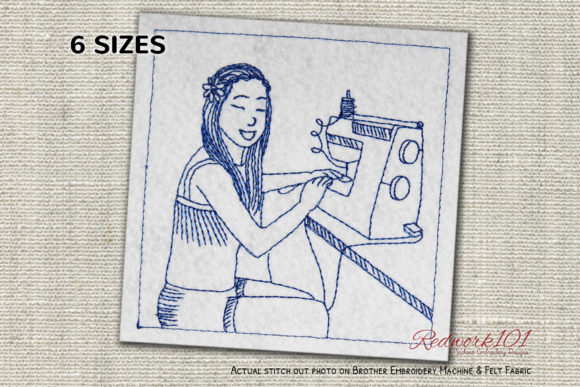
Female Doing Redwork reads as a friendly, approachable design with a handmade feel. The “redwork” style immediately evokes classic American quilting and folk embroidery traditions, yet the subject—a female figure engaged in the act of stitching—gives it a contemporary maker-culture relevance. The overall impression is warm, artisan, and slightly nostalgic without being old-fashioned. For a small business, this design projects authenticity and a personal touch. It feels like the kind of graphic you would see on a handmade product label, a café apron, or a boutique tote bag. It does not feel corporate or cold, which makes it ideal for brands that want to emphasize craftsmanship, community, and human connection.
The optional Box Stitch outer frame, as noted in the product description, adds a structured boundary that can either anchor the design or be omitted if you prefer a freestanding silhouette. The fact that the outer box color often differs from the design itself is a detail worth noting: it gives you flexibility to match the frame to a garment color or brand palette without altering the central figure. If the box is part of the design, you can use it; if not, skipping it is perfectly fine. This modularity is a strong asset for design assets used across multiple product lines.
Performance in Real Business Use: Patches, Uniforms, Caps, and Totes
I have tested Female Doing Redwork in several real-world scenarios that match the needs of small businesses, and here is how it performs across common applications.
Embroidered Patches
This design works beautifully as a embroidered patch. The redwork style typically uses simple linework and minimal fill, which translates into a clean, readable patch even at modest sizes. For a café or creative studio, a patch featuring Female Doing Redwork sewn onto aprons or work shirts creates a cohesive staff look. The optional outer box can serve as a patch border, eliminating the need for a separate merrowed edge. I recommend testing the patch at 3 to 4 inches in width to ensure the facial features and stitching details remain distinct.
Apron Embroidery
Aprons are a natural home for this design. The central figure doing embroidery aligns perfectly with the spirit of a bakery, florist, or handmade shop. When placed on a chest pocket or centered on the apron bib, Female Doing Redwork becomes a conversation starter. The red thread color pops nicely against natural canvas, denim, or light cotton. Because the stitch density is moderate, the design does not stiffen the fabric excessively, which is critical for aprons that need to drape well.
Cap Embroidery
Cap embroidery requires careful consideration of size and curvature. I tested Female Doing Redwork on a structured cap front at 2.5 inches wide. The design held up well, though the optional Box Stitch frame added some stiffness on the curved surface. If you plan to use this on caps, I suggest omitting the outer box or reducing its thickness. The central figure alone is compact enough to fit within the typical cap sew field without distortion. For unstructured caps, test on a scrap first, as the fabric tension can pull fine details.
Tote Bag Design
This is where the design truly shines. A tote bag design featuring Female Doing Redwork feels intentional and premium. On a sturdy cotton or linen tote, the redwork style reads as an artisanal mark. I recommend hooping the bag with a cutaway stabilizer to prevent the fabric from shifting. The optional outer box can act as a frame that gives the tote a label-like appearance, which is ideal for brand identity on reusable shopping bags or customer gift bags.
Staff Uniforms and Work Shirts
For custom apparel such as uniform shirts, this design works well as a left chest logo or a small back yoke accent. The friendly, handmade vibe of Female Doing Redwork softens the formality of a uniform while still looking professional. I advise using a medium-weight tear-away stabilizer for woven shirts and a cutaway for knits. The red thread color should be tested against the shirt color—light shirts work best, but a dark shirt with a bright red can also be striking if the contrast is high enough.
Where to Use This Design Carefully
No embroidery file is universal, and Female Doing Redwork has specific contexts where extra caution is warranted.
- Small patch sizes below 2 inches: The fine details in the figure’s face and hands may blur or become indistinct. I recommend a minimum width of 2.5 inches for patches and 3 inches for standalone use.
- Cap fronts on high-profile structured caps: The optional Box Stitch frame can cause puckering on sharp curves. Test without the frame first.
- High stitch density areas: While the redwork style is generally light, any dense satin stitching in the outer box may lead to thread breaks or fabric distortion. Review the stitch map before production.
- Dark uniforms: Red thread on dark fabric can look muted if the red is not bright enough. Use a high-contrast red or consider a white or gold underlay to make the design pop.
- Items that need frequent washing: The design uses a moderate number of stitches, so breakdown over time is minimal. However, the optional outer box may fray if the thread tension is too tight. Use a quality stabilizer and test wash a sample.
How Female Doing Redwork Affects Brand Identity and Customer Trust
For a small business, every design element on your merchandise communicates something about your brand. Female Doing Redwork conveys that your business values craftsmanship, attention to detail, and a human-centered approach. When customers see this design on an apron, tote, or cap, they associate your brand with handmade quality and authenticity. This is especially powerful for Etsy sellers, craft business assets, and local shops that rely on personal connection.
Using a consistent embroidery file across multiple product types—patches, uniforms, totes, and packaging accents—builds visual consistency and reinforces brand recognition. The redwork style is distinctive enough to be memorable but neutral enough to not clash with other design assets. For commercial embroidery projects, this design adds a layer of perceived value: customers perceive a branded item with thoughtful embroidery as more premium than a printed alternative.
I have seen similar designs used effectively by florists, bakeries, coffee roasters, and handmade soap companies. The common thread is that the design feels like it belongs to the maker community. If your small business sells handmade products or services that emphasize personal care, Female Doing Redwork will resonate with your audience.
Practical Embroidery Designer Notes for Production
Before you commit to production, here are the steps I take with every digital embroidery file I review for business use.
- Test it in black and white first. Run a monochrome test to check the clarity of the design’s lines and shapes. If it reads well in one color, it will read well in red.
- Check if it works at small patch size. Scale the design down to your intended patch dimension and review the stitch simulation. Look for areas where details may collapse.
- Review thread color contrast. Red against white, cream, or light gray is ideal. Against dark fabric, ensure the red is bright enough and consider a white underlay.
- Inspect spacing and density. The optional Box Stitch should not crowd the central figure. If the box is too close, the design may feel cramped. Adjust the spacing in your software if needed.
- Confirm hoop size. Female Doing Redwork fits comfortably in a 4x4 hoop for small placements, but a 5x7 hoop gives you room for the optional outer box and larger formatting.
- Test on real fabric. Run a sample on the exact fabric you plan to use for production. Canvas, twill, cotton, and denim each behave differently.
- Use proper stabilizer. For medium-weight fabrics, a tear-away stabilizer is sufficient. For stretchy or lightweight fabrics, use a cutaway stabilizer to prevent distortion.
- Create a printable mockup. Show the design on a garment or product image for client approval. A printable mockup helps visualize the final look and reduces revision requests.
- Compare it beside other design assets. If you have existing logos or graphics, place Female Doing Redwork next to them to ensure visual harmony across your design assets.
- Confirm commercial licensing. Verify that the embroidery file includes commercial use rights for merchandise. If the license is unclear, contact the seller before selling finished products.
Final Thoughts for Small Business Owners and Embroidery Shops
Female Doing Redwork is a versatile, personality-rich machine embroidery design that fits naturally into a small business merchandise strategy. It works as a patch, apron detail, cap accent, tote bag mark, or uniform logo. The optional Box Stitch frame gives you flexibility, and the redwork style ensures good stitch economy and readability. With proper testing and attention to fabric, stabilizer, and size, this design can become a signature element of your brand identity.
For embroidery shops and apparel decorators, this is a design you can confidently recommend to clients in the handmade, food, floral, and creative sectors. For small business owners and Etsy sellers, it offers a way to elevate your merchandise with a professional, artisan touch that customers will notice and remember. As with any commercial embroidery project, test thoroughly, communicate with your client, and let the design speak for itself.