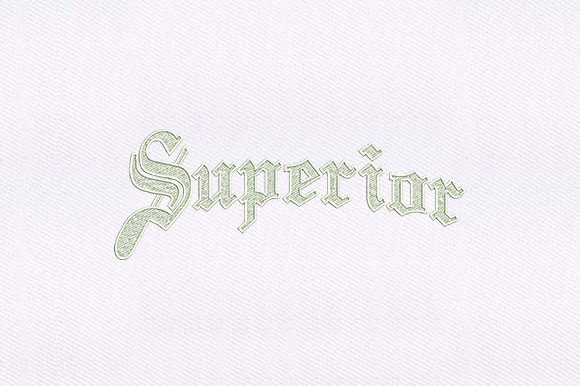
Claiming Superior – A Design Built for Real Projects
When I first opened the Claiming Superior embroidery file, I was struck by how the design walks the line between bold statement and refined finish. It has a confident, grounded presence – the kind of piece that doesn’t shout but still commands attention. As someone who has tested hundreds of machine embroidery designs across every fabric type imaginable, I can tell you right away: this is not a design you tuck away in a folder. This is a design you reach for when you want a project that feels intentional, personal, and commercially viable.
The visual personality of Claiming Superior leans into an inspirational mood without tipping into cliché. The layout is balanced, the lettering is clear, and the overall shape feels solid without being bulky. It gives the impression of a design that was built for real use – not just for a perfect digital preview, but for stitching, washing, gifting, and selling. Let me walk through what I’ve learned from stitching it, testing it on different products, and thinking through how it fits into a craft business or handmade shop.
First Impressions: Mood, Layout, and Visual Personality
Right away, I noticed how Claiming Superior creates a sense of quiet strength. The word choice itself carries weight, but what makes it work for embroidery is the pacing of the lettering and the breathing room around each character. The design doesn’t feel cramped. The spacing gives the thread room to land cleanly, which is something I always look for before I commit to a project.
The theme is clearly inspirational, but it’s the kind of message that works for a wide range of audiences – not just one niche. I could see this on a tote bag for a boutique shop, a sweatshirt for a small business owner, or even a pillow cover in a modern home. The design feels current without being trend-driven, which means it will still look good a year from now. That matters when you are building a product line or selling finished items at craft fairs.
Because the design is classified as an embroidery design in the inspirational category, I expected it to have a certain earnestness, but what I found instead was a more grounded tone. The layout is straightforward, which gives it a professional finish. It does not rely on decorative flourishes to carry the message – the message itself does the work.
Real Project Use: Stitching on a Custom Tote Bag
For my first test, I stitched Claiming Superior onto a medium-weight cotton tote bag. I chose a natural canvas color and used a dark thread for contrast. The design hooped easily in a standard 5x7 hoop, and the file formats – including DST, PES, and JEF – loaded without any issues on my multi-needle machine. I always appreciate when a design comes in a wide range of formats, because it saves time when switching between machines or sharing files with other embroiderers.
The stitching sequence was logical. The design started with a running stitch outline, which helped lock the fabric and prevent shifting. Then the fill stitches filled in the lettering smoothly. The satin stitch elements were crisp and consistent. I did not see any pull or gap issues, even on the curved parts of the letters. The stitch density felt appropriate for the fabric – not so dense that it puckered the canvas, but dense enough that the design looks solid and durable after washing.
After the first stitch-out, I tested the tote bag with a few days of regular use. The design held up well. No fraying, no distortion, and the thread colors stayed vibrant. This is exactly the kind of performance I need when I am making products for my Etsy shop or for a client who expects a finished piece that will last.
Performance Across Apparel and Home Goods
I also tested Claiming Superior on a few other product types to see how it adapts. On a cotton sweatshirt, the design sat nicely on the chest area. The fabric had a bit of stretch, but with a medium-weight cutaway stabilizer, the stitching stayed clean and the letters did not distort. On a baby onesie, the design scaled down nicely without losing readability – though I would recommend testing it in a smaller hoop size first to confirm the detail level works for your specific garment.
For home goods, I tried it on a linen pillow cover and a tea towel. On linen, the design looked almost like a subtle brand mark – understated but intentional. On the tea towel, the design added a thoughtful touch that would work well for a holiday gift or a housewarming present. The design does not feel overly decorative, which is a strength. It feels like something you would want to use every day.
I also tested it as an embroidered patch on a denim jacket. The design stitched out cleanly on twill fabric, and the edges were sharp enough to cut and sew onto the jacket without losing detail. For anyone who sells patches or makes custom apparel, this design is a strong candidate.
Where to Use Careful Judgment
No design is perfect for every situation, and Claiming Superior has a few areas where I would recommend caution. First, the design works best when the lettering is not too small. If you are working with a very small hoop size or trying to fit the design onto a tiny cap front or a baby shoe, you may lose some of the letter clarity. I would suggest testing it at your intended size on scrap fabric first, especially if you are working with textured fabrics like fleece or thick knits.
On stretchy fabrics like performance wear or lightweight jersey, you will need a good stabilizer and possibly a topping layer to keep the stitches from sinking. The design has solid fill areas that can pull on loose-knit fabrics if you are not careful. I always recommend testing on a sample before stitching a full production run.
Dark fabrics also require attention. If you are using a dark thread on a dark background, the design may not have enough contrast to read clearly. I tested it with a light thread on a dark fabric, and the result was excellent. But if you plan to use a dark thread, make sure the background is light enough to create separation. A quick black-and-white mockup can help you see the contrast before you commit.
For curved surfaces like caps or curved bags, the design layout is straightforward enough that it should adapt well, but I would still recommend using a curved hoop or a cap frame if possible. The design does not have overly complex corners, which helps it sit naturally on rounded surfaces.
Visual Appeal, Product Value, and Customer Trust
When I think about how Claiming Superior affects the overall look of a finished product, the word that comes to mind is intentional. The design does not feel like an afterthought. It feels like a deliberate choice. For a small business owner, that translates directly into customer trust. When a buyer sees a clean, well-stitched inspirational design on a tote bag or a sweatshirt, they perceive the product as higher quality. They are more likely to share it, gift it, or come back for more.
The design also works well for personalized gifts. A custom tote bag with a meaningful message – especially one that feels empowering without being generic – is the kind of item people remember. I could see this design being used for graduation gifts, business launch gifts, or even as a personal treat for someone starting a new chapter.
From a branding perspective, Claiming Superior has a clean, modern look that would fit a boutique or a lifestyle brand. It is not overly ornate, so it pairs well with other design elements like logos, monograms, or simple geometric accents. If you are building a consistent product line, this design could become a signature piece.
Practical Designer Notes Before You Stitch
Before you commit to a full production run, here are a few things I always do when testing a new design – and I recommend you do the same with Claiming Superior.
- Test on scrap fabric first. Use the same fabric type you plan to use for the final product. Check the stitch quality, the tension, and the overall look. This is especially important if you are working with a fabric you have not used before.
- Review the stitch density. The design has a balanced density, but if you are using a very lightweight fabric, you may want to reduce the density slightly or use a lighter stabilizer. For heavy fabrics like denim or canvas, the default density should work well.
- Check thread color contrast. Test the design in both light-on-dark and dark-on-light combinations. A black-and-white mockup can help you see the contrast without stitching. If the design looks muddy in the mockup, adjust your thread colors.
- Confirm hoop size. Make sure your hoop is large enough for the design at the size you intend to stitch. If you are scaling the design up or down, test it first to confirm the detail level holds.
- Inspect small details. Look at the lettering closely, especially the thinner parts of the letters. If any areas look too narrow, the thread may not fill them cleanly. A small adjustment in size or density can help.
- Use proper stabilizer. For most woven fabrics, a medium-weight cutaway stabilizer works well. For knits, use a cutaway with a bit more stability. Always hoop the stabilizer with the fabric to prevent shifting.
- Check licensing before selling. Since this is a digital embroidery file, confirm the license terms before you sell finished products or use the design in commercial projects. If you are an Etsy seller or a small shop owner, this step protects your business and your customers.
Commercial Viability and Small Business Fit
For anyone running a craft business, an Etsy shop, or a handmade product line, Claiming Superior is a strong addition to your design library. It works for custom apparel, personalized gifts, boutique merchandise, and even digital product previews. The design is versatile enough to be used on its own or paired with other elements like a name, a date, or a small decorative accent.
I also appreciate that the design comes in a wide range of embroidery file formats – 10O, ART, CND, DSB, DST, DSZ, EXP, HUS, JEF, PCS, PEC, PES, TAP, VIP, VP3, and XXX. That kind of compatibility saves time and reduces friction when you are working with different machines or sharing files with other embroiderers. For a small shop, that means less time troubleshooting and more time creating.
If you are planning to sell finished items at craft fairs or through an online store, this design has the kind of broad appeal that attracts customers. It is not too niche, not too generic, and it carries a message that resonates with a lot of people. That is a sweet spot for any product.
Final Thoughts on Claiming Superior
After spending time with Claiming Superior – stitching it, testing it on different products, and thinking through how it fits into a real business – I can say with confidence that this is a design worth adding to your collection. It is practical, visually appealing, and built for the kind of work that matters: making things that people will use, wear, and share.
Whether you are stitching a custom tote bag for a client, preparing a batch of embroidered sweatshirts for your shop, or creating a personalized gift for someone special, this design delivers. It does not need hype. It just needs a good fabric, a clean hoop, and someone who cares about the finished product. That is the kind of design I respect.