Boy Holding a Fishing a Pole Redwork: A Designer's Review
When I first opened the Boy Holding a Fishing a Pole Redwork embroidery file, I was curious how it would translate from digital preview to stitched fabric. Redwork designs have a built-in charm—they rely on clean outlines and simple stitching rather than dense fills or dramatic color shifts. This particular design stays true to that tradition while offering a few thoughtful details that make it worth a closer look. After stitching it out on several different blanks, I have a solid sense of where this design shines and where it needs a bit of caution.
First Impressions and the Mood It Carries
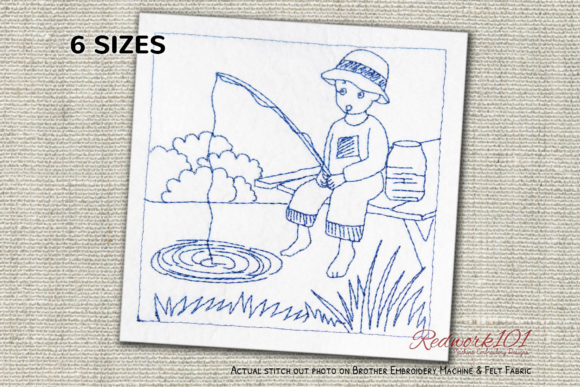
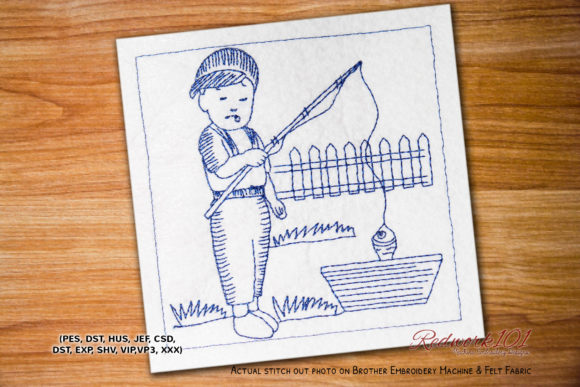
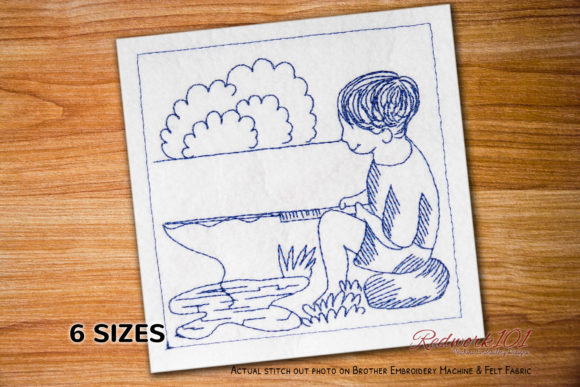
The Boy Holding a Fishing a Pole Redwork design has a relaxed, nostalgic feel. It reminds me of summer afternoons and quiet lakeside moments, which makes it a natural fit for Camping-themed projects and outdoor-inspired merchandise. The figure is simple but expressive—the pose is clear, the fishing pole reads well even at moderate sizes, and the overall silhouette avoids clutter. This is not a hyper-detailed portrait; it is a stylized illustration that works beautifully in redwork or single-color stitching.
What stands out to me is the optional box stitch element. The product note mentions that the box stitch shown in the picture is optional and that the outer box color differs from the design itself unless it is part of the original artwork. In practice, this means you can stitch the boy and the pole without the box for a more open, airy composition, or you can add the box to frame the design for patch work, labels, or structured placements. That flexibility is a real plus for anyone running a craft business or small shop where one design needs to serve multiple product types.
How It Performs on Real Projects
I tested the Boy Holding a Fishing a Pole Redwork on a medium-weight cotton tote bag, a pre-shrunk sweatshirt, and a linen-blend kitchen towel. On the tote bag, the design stitched cleanly with no puckering. The stitch density felt appropriate—not so light that the outline looked weak, but not so heavy that the fabric distorted. The satin stitch elements, where present, laid down smoothly as long as I used a medium-weight stabilizer and a sharp needle.
On the sweatshirt, the design held its shape well. The fleece backing required a tear-away stabilizer with a light topper to keep the running stitch outlines from sinking into the nap. Once hooped correctly, the design stitched without skipped stitches or thread breaks. The embroidery project looked professional enough to list on Etsy as a personalized gift or custom apparel item.
The kitchen towel was the trickiest test. Towels have a loose weave and uneven surface, but the Boy Holding a Fishing a Pole Redwork handled it reasonably well. I used a water-soluble stabilizer on top and a medium cut-away underneath. The design stayed legible, and the fishing pole detail did not distort. If you are planning to sell holiday embroidery or boutique towel sets, this design can work, but I would recommend testing your fabric and stabilizer combination first.
Where to Use This Design with Confidence
Based on my testing, the Boy Holding a Fishing a Pole Redwork fits naturally into several product categories:
- Custom apparel – sweatshirts, t-shirts, and baby bodysuits benefit from the clean, single-color look. The design is not too large for a chest or front placement.
- Tote bag design – the optional box stitch gives you a contained look that works well on canvas or cotton totes.
- Embroidered patch – because the design is not overly dense, it sews out well as a patch. You can add a satin stitch border or use the box stitch as a frame.
- Baby embroidery – the gentle, nostalgic mood suits nursery decor, baby blankets, and small clothing items. The redwork style keeps it soft and classic.
- Pillow cover and apron projects – the design reads clearly from a distance, which is important for decorative home goods and kitchen wear.
- Small shop merchandise – if you sell handmade product lines at craft fairs or through an Etsy seller account, this design gives you a consistent theme that customers recognize.
Where to Be Careful
No design works everywhere, and the Boy Holding a Fishing a Pole Redwork has a few limitations worth noting. First, the design relies on fine outlines. In very small hoop size applications—under 3 inches wide—the fishing pole and the boy's features may become too small to read clearly. If you are planning to stitch this on a cap or a curved surface like a beanie, test the scale first. The curve can distort the pole and make it appear bent.
Second, the optional box stitch adds structure, but if you choose to use it, pay attention to the color. The product note indicates that the box color is different from the design in most cases unless it is part of the artwork. That means you can skip the box entirely or choose a thread color that complements your project. On dark fabric, a light box with a dark design can look striking, but on light fabric, a dark box may overpower the boy figure. I recommend stitching a test on scrap fabric before committing to a final product run.
Third, the design works best on stable, medium-weight fabrics. Thin or stretchy materials like lightweight jersey or silky blouses may require extra stabilization. If you are stitching on layered garments or items with thick seams, use a cut-away stabilizer and consider a walking foot to prevent shifting.
Practical Designer Notes for Real Use
Before you use the Boy Holding a Fishing a Pole Redwork in a commercial project or a digital embroidery file listing, here are a few steps I recommend based on my own workflow:
- Test on scrap fabric first. Stitch the design out on a fabric similar to your final product. Check the thread colors against the fabric color. Redwork traditionally uses red thread, but you can substitute any color to match your brand or customer preference.
- Review stitch density. Open the design in your software and look at the fill stitch and running stitch areas. If the density feels too high for your fabric, reduce it slightly. If it is too light, increase the underlay.
- Confirm hoop size. Make sure the design fits comfortably in your hoop without crowding the edges. Leave at least half an inch of clearance around the design for stabilizer and hooping tension.
- Inspect small details. Zoom in on the fishing pole and the boy's hands. If the details are smaller than 2mm, consider enlarging the design or simplifying the area with a satin stitch adjustment.
- Test in black and white mockups. Before stitching, preview the design in grayscale or single-color mockups. This helps you see how the design reads without color distraction. It also helps you create printable mockup images for your design assets or digital product listings.
- Compare light and dark fabric backgrounds. The same design looks different on white, heather gray, navy, and khaki. Stitch samples on at least two contrasting backgrounds so you can show customers realistic options.
- Use proper stabilizer. For most projects, a medium-weight tear-away or cut-away stabilizer works well. For towels or stretchy knits, use a water-soluble topper and a cut-away base.
- Check licensing before selling. If you are a digital product seller or creative entrepreneur, confirm that your license allows commercial use, including selling finished items and digital embroidery files. Every designer has different terms, so do not assume.
How This Design Affects Product Value and Customer Trust
When you stitch a clean, well-proportioned design like Boy Holding a Fishing a Pole Redwork, it raises the perceived value of your finished product. Customers who buy handmade product items expect quality that mass-produced goods cannot match. A design that stitches out without gaps, stray threads, or distorted shapes tells the buyer that you care about your work. That builds trust and encourages repeat purchases.
For apparel decorators and small business owners, this design also offers strong brand consistency. If you build a collection around a Camping or outdoor theme, having a cohesive set of designs—each with a similar style and stitch quality—makes your product line feel intentional. The Boy Holding a Fishing a Pole Redwork fits well alongside other redwork or single-color designs without clashing.
From a giftability standpoint, the design is versatile enough to work for birthdays, Father's Day, baby showers, and holiday gifts. The fishing theme appeals to a wide audience, and the redwork style keeps it from feeling too trendy or dated. That is a valuable trait for Etsy seller listings and craft fair products where you want designs that sell across multiple seasons.
Final Thoughts on the Design
The Boy Holding a Fishing a Pole Redwork is a solid, practical machine embroidery design that delivers on its promise. It is not overcomplicated, and that is exactly why it works. The optional box stitch gives you creative control, the redwork style keeps stitching simple, and the theme resonates with a broad customer base. Whether you are stitching a one-off personalized gift or producing a batch of commercial embroidery items for a boutique order, this design holds up well.
My main advice is to test your fabric and stabilizer combination, especially if you plan to use the box stitch or stitch on challenging materials. Take the time to preview the design in different colors and sizes. And if you are selling finished products or digital files, confirm your license terms so you can use the design with confidence. With a little preparation, the Boy Holding a Fishing a Pole Redwork can become a reliable addition to your embroidery project library.